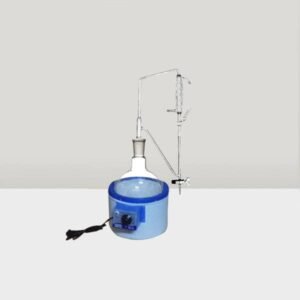
Clevenger Apparatus price
The Clevenger apparatus is a laboratory apparatus used for the extraction of essential oils from plant materials, particularly aromatic plants. Essential oils are volatile, concentrated liquids that contain aromatic compounds from plants, and they are often used in perfumes, flavorings, and various therapeutic applications.
The Clevenger apparatus is commonly employed in a method called steam distillation, which is a technique for isolating essential oils from plant materials. The apparatus is named after its inventor, Dr. Charles Clevenger. The basic components of a Clevenger apparatus include:
- Boiling Flask:
- The plant material is placed in this flask, along with water. As the water is heated, steam is generated.
- Condenser:
- The steam, carrying the essential oil vapor, passes through the condenser. The condenser is a tube or coil that is typically cooled with water or another cooling agent.
- Receiver (Essential Oil Separator):
- The essential oil vapor, upon cooling in the condenser, condenses into a liquid. This liquid, which consists of water and the essential oil, then drips into a separate receiver. The receiver usually has a graduated neck to allow for the measurement of the volume of the collected essential oil.
- Water Supply:
- A continuous supply of water is needed to cool the condenser and facilitate the condensation of the essential oil vapor.
The Clevenger apparatus allows for the efficient separation of essential oils from plant materials without the use of solvents. Steam distillation is particularly suitable for extracting volatile compounds that are sensitive to heat. The collected essential oil can be used for various purposes, including aromatherapy, perfumery, and as flavorings in the food and beverage industry.
It’s worth noting that while the Clevenger apparatus is a classic and widely used method, there are other modern techniques and apparatus for extracting essential oils, such as hydrodistillation and various types of distillation equipment with improved efficiency and precision.
Showing the single result